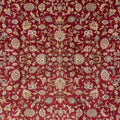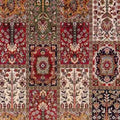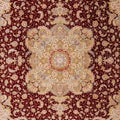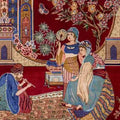

Indian rugs represent one of the most diverse traditions of Asian textile art. Regions such as Kashmir, Rajasthan, and Uttar Pradesh have shaped designs, materials, and techniques refined over centuries. From delicate silk masterpieces to expressive wool creations — Indian rugs combine artisanal sophistication with deep cultural heritage.
Indian Rugs: Key Facts at a Glance
- Handcrafted rugs from Kashmir, Rajasthan, Punjab, Uttar Pradesh, and Gujarat
- Rich color palette including reds, blues, golds, and greens
- Design range from floral to geometric
- Materials: wool, cotton, and silk
- Knot densities of approx. 100,000–700,000 knots/m²
- Cultural significance in festivals, rituals, and family traditions
- Each piece reflects its region of origin
Discover Our Indian Rugs – View the Collection
The History & Cultural Significance of Indian Rugs
Indian carpet artistry flourished under the Mughal emperors in the 16th century. Court workshops created prestigious pieces that merged Persian floral influences, arabesque ornamentation, and Indian symbolism — many of which remain visible in contemporary weaving traditions.
During the colonial era, Indian rugs spread internationally, especially in Europe, where they became admired decorative and socially symbolic objects. Today, they continue to play an important role in ceremonies, family rituals, and celebratory traditions.
Patterns, Colors & Regional Variety of Indian Rugs
Indian rugs display an extraordinary variety of motifs. Major regional styles include:
- Kashmir: fine silk rugs with floral–geometric combinations and delicate “Butti” motifs
- Rajasthan & Punjab: vibrant designs inspired by folk art and scenes of daily life
- Uttar Pradesh: high knot counts, detailed floral patterns, refined color harmony
- Gujarat: rustic, nomadic rugs with traditional symbolism
The color palette is vivid, ranging from deep reds to cool blues and elegant gold and green tones. Many shades are traditionally derived from natural pigments.
Rug Materials & Indian Weaving Artistry
The choice of materials defines structure, character, and feel:
- Wool: durable, warm, and naturally elastic
- Cotton: commonly used in the foundation, stable and reliable
- Silk: for exceptionally fine and detailed pieces; lustrous and precise
Knotting techniques vary by region. Knot densities between 200,000 and 700,000 knots/m² are considered high‑quality; finer structures are especially labor‑intensive.
Major Rug‑Making Provinces of India
| Region | Signature Features | Colors & Designs | Highlights |
|---|---|---|---|
| Kashmir | Delicate silk rugs | Pastel, cream, red | Fine motifs, “Butti” designs |
| Rajasthan | Vibrant, robust | Red, yellow, blue | Wool rugs, folkloric motifs |
| Punjab | Durable and expressive | Strong colors | Wool rugs with scenes from daily life |
| Uttar Pradesh | Fine, highly detailed | Floral designs | High knot densities |
| Gujarat | Rustic, nomadic | Earth tones, orange | Traditional nomadic rugs |
Care & Preservation
- Avoid direct sunlight
- Use mild cleaning products
- Rotate the rug occasionally
More detailed information can be found in our guide How Do I Properly Care for Hand‑Knotted Rugs?
For insights into long‑term value, see Are Hand‑Knotted Rugs a Good Investment?
Checklist: How to Identify a High‑Quality Indian Rug
- Handmade with subtle irregularities
- High‑quality wool, cotton, or silk
- Knot density from approx. 100,000 knots/m²
- Well‑defined floral or geometric motifs
- Harmonious colors without artificial shine
- Clearly visible pattern on the back
- Recommended: certificate of origin or authenticity
FAQ – Indian Rugs
What Makes Indian Rugs Special?
► Their diversity of regional motifs, vibrant colors, and refined craftsmanship.
Why Are Kashmir Rugs So Highly Valued?
► For their fine silk structures, delicate motifs, and precise craftsmanship.
How Can I Identify a High‑Quality Indian Rug?
► Through material quality, well‑executed knotting, and a clearly visible pattern on the back.
How Should Indian Rugs Be Cared For?
► Gentle vacuuming, avoiding sunlight, and rotating occasionally.
Conclusion
Indian rugs unite regional history, artistic diversity, and masterful craftsmanship. Their wide spectrum of motifs — floral, geometric, and culturally symbolic — paired with materials such as wool and silk ensures both longevity and aesthetic richness. Whether a delicate Kashmir silk rug or a vibrant wool creation, each piece carries a regional narrative and brings cultural depth to both modern and classic interiors.