



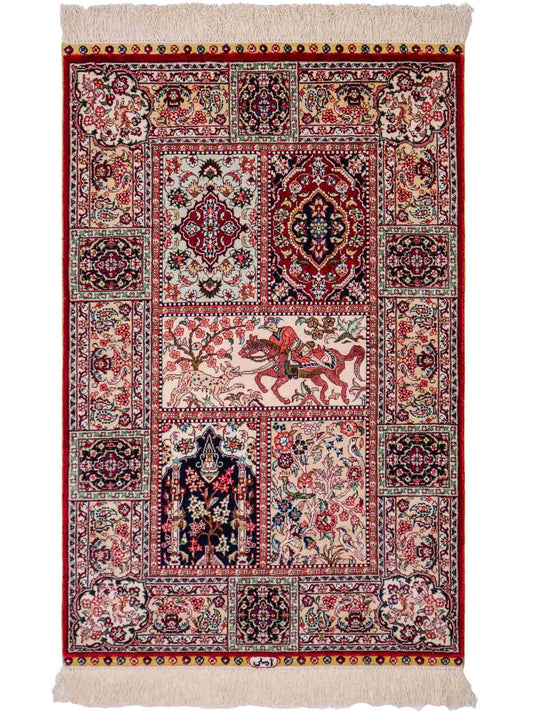
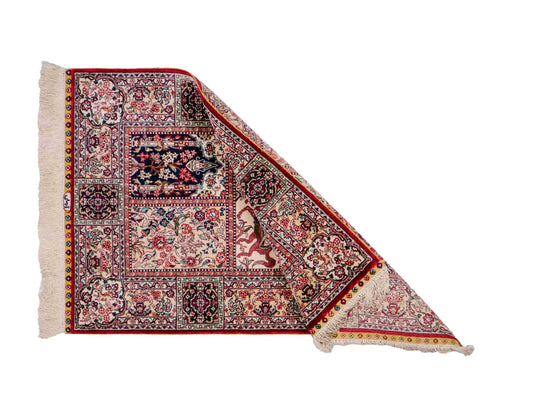
What Makes a Signed Qom Rug So Special?
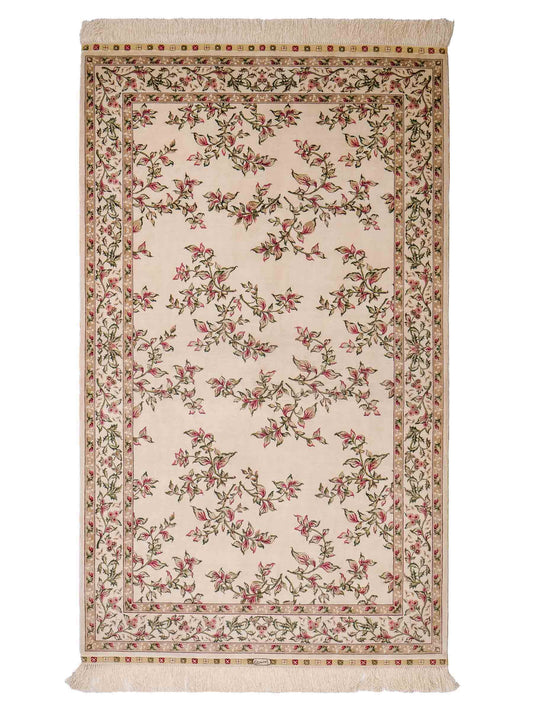
The signature on an authentic Qom rug gives the piece its distinctive aura. Often woven in refined Farsi calligraphy—and sometimes accompanied by provenance, date or the atelier’s emblem—it resembles the signature on a painting. It certifies authenticity, showcases the skill and reputation of the weaving master and documents the rug’s origin and creation. Such signatures are used only by renowned workshops or master weavers, lending these rugs exclusivity and significant collector value. A signed Qom rug from a respected master or atelier is today considered cultural heritage, a status symbol and a coveted collector or investment piece—bringing not only value but also history and vibrant craftsmanship into any space. Learn more about value retention.
History & Geographical Origin of Signed Qom Rugs
Qom, located south of Tehran, has been world‑famous since the 20th century for extraordinarily fine, luxurious silk rugs and intricate miniature motifs. A Qom rug embodies Persia’s finest silk‑weaving heritage, symbolic floral and medallion motifs, imaginative tableau compositions and the precision of generational master ateliers—its signature affirming origin, prestige and artistic status.
In addition to original rugs from Iran, exceptionally refined Sino Qom silk rugs are produced today in leading Chinese ateliers—many of which craft some of the world’s finest pieces exclusively for Khademi. These rugs are internationally recognised as exceptional artworks in their own right.
Manufacturing Process – From Atelier to Signed Masterpiece
1.) Selection & Dyeing of Premium Materials:
Production begins with only the finest raw materials: pure natural silk or, in special variants, the highest‑grade cork wool known for its softness and durability. Yarn dyeing takes place in small batches using long‑preserved dye recipes, ranging from natural plant dyes to modern pigments. Precise control of temperature and timing ensures depth, luminosity and a subtle play of light—key to the rug’s eventual brilliance and harmony.
2.) Knotting Technique & Motif Design at the Highest Level:
On a vertical loom, experienced weavers transform the designs into reality, knot by knot. The asymmetrical Persian (Senneh) knot is commonly used, enabling extremely high knot density for fine details and precise linework. Whether complex medallions, detailed tableaus or elaborate floral fields—each composition demands planning, mastery and dexterity. The artist’s or atelier’s signature is woven carefully into the field edge, the border or directly into the medallion. Because even the smallest lettering must remain perfectly legible, integrating the signature requires additional finesse and technical precision.
3.) Finishing, Contouring & Quality Inspection:
After knotting, the rug undergoes several finishing steps. It is gently washed to remove remaining dyes and to soften the fibres. The pile is hand‑sheared to a precise height, enhancing contour definition and clarity of motifs—including the signature. Controlled stretching and drying ensure perfect proportions and a flawless surface. In the final inspection, only pieces that meet the highest standards in material, aesthetics and craftsmanship are designated as genuine signed Qom masterpieces.
Pattern Variety & Colour Palette of Signed Qom Rugs
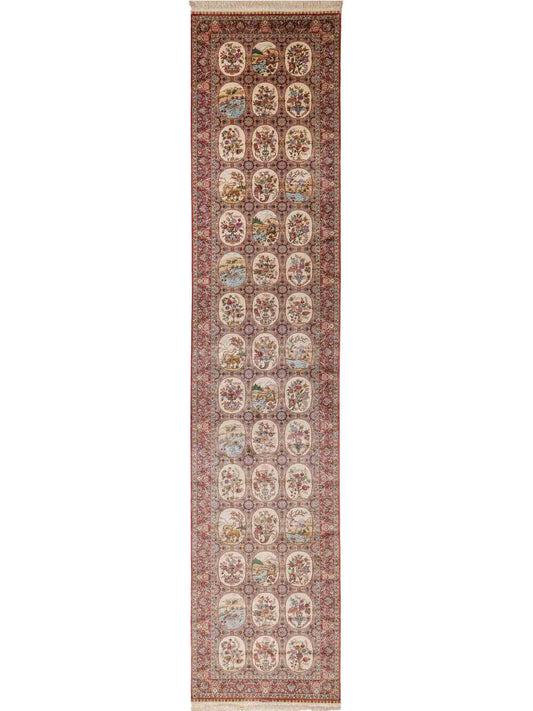
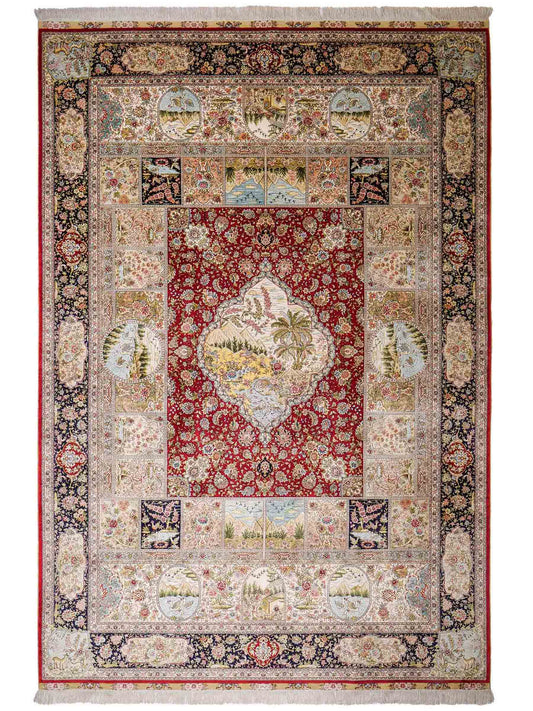
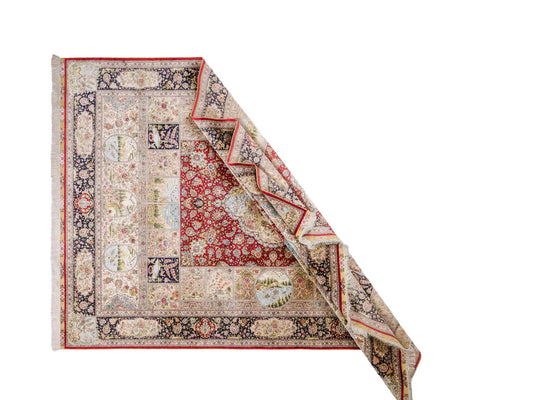
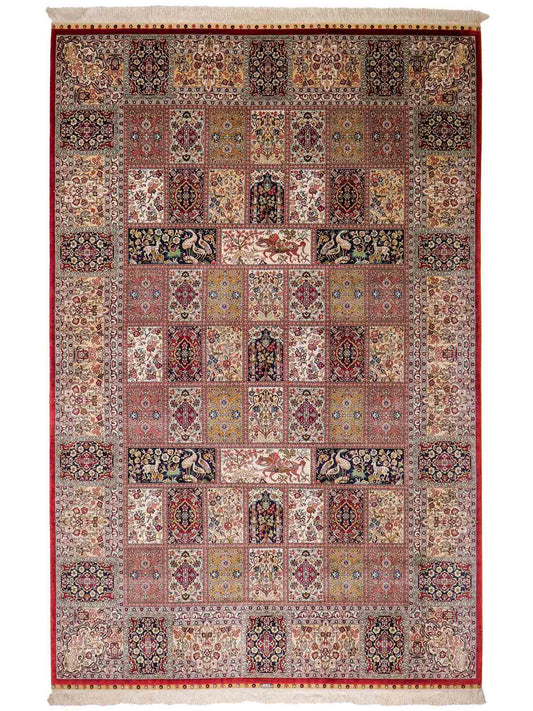
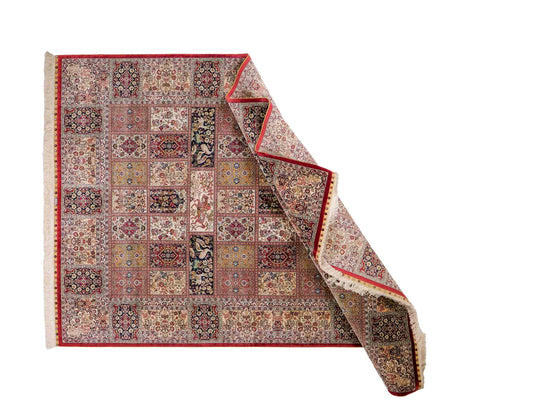
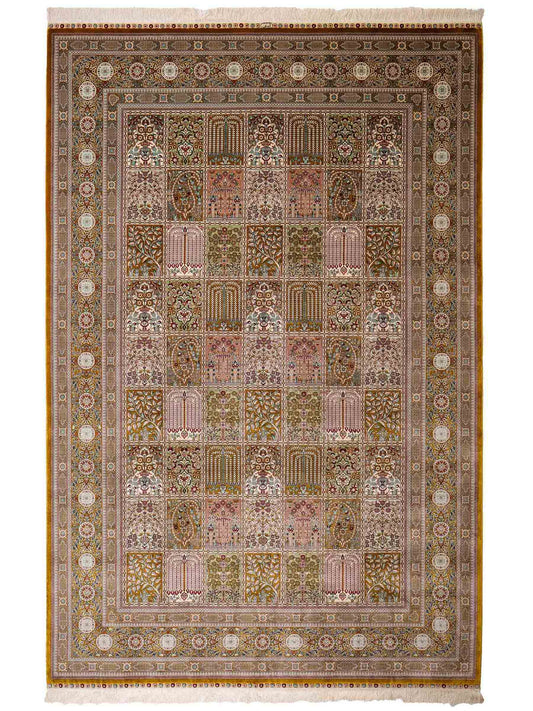
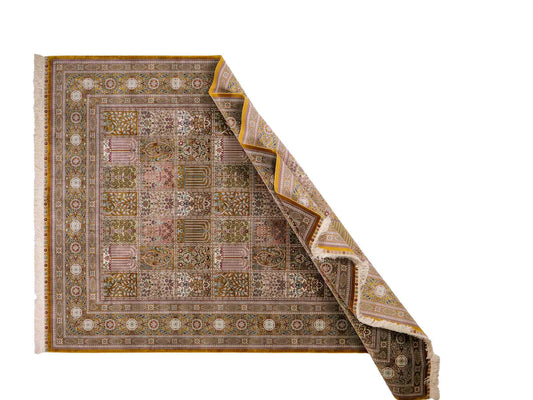
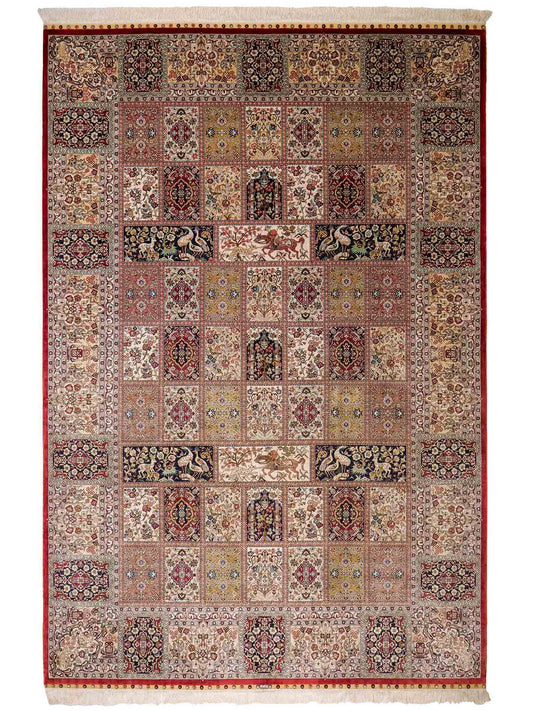
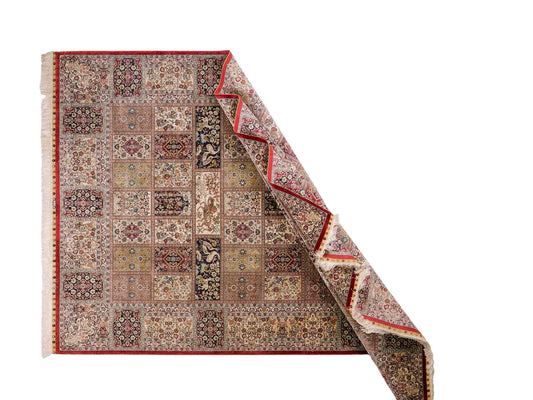
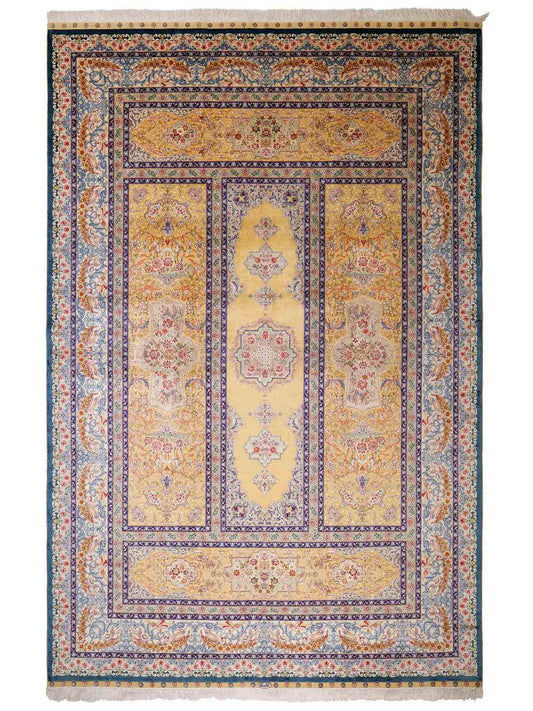
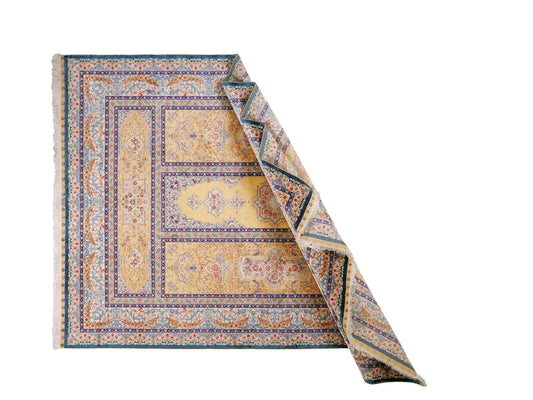
Signed Qom rugs present a fascinating world of motifs and colour harmonies. Typical are elaborate medallions in ivory, gold, ruby red, smoke grey, royal blue or emerald green—conveying majestic presence. Finely wrought miniature motifs, detailed allover fields and richly staged tableau designs tell symbolic and narrative stories with extraordinary elegance.
Pictorial rugs and paradise‑garden depictions are especially captivating: imaginative animal mosaics, foliage and interwoven arabesques invite prolonged contemplation. The palette spans nuanced pastels and multicolours to shimmering gold, smoke blue, rose, cinnamon, mint and sand. Each rug shifts subtly with light, cultural influences and the atelier’s artistic signature—making every signed Qom rug a one‑of‑a‑kind masterpiece with strong artistic expression.
Choosing the Right Size – Signed Qom Rugs for Floor & Wall
Signed Qom rugs unfold their grandeur in virtually any size and interior setting. In spacious living rooms, galleries or refined salons, sizes such as 240×170 cm, 270×180 cm or 300×200 cm become impressive focal points. Even more striking are oversized formats—300×250 cm, 350×250 cm or 400×300 cm—that shape the character of expansive spaces.
Smaller sizes—from 60×40 cm, 90×60 cm to 120×80 cm—serve beautifully as framed tableaus, wall art or treasured gift pieces. Medium formats such as 150×100 cm, 180×120 cm or 200×150 cm create elegant accents in studies, alcoves or private collector rooms.
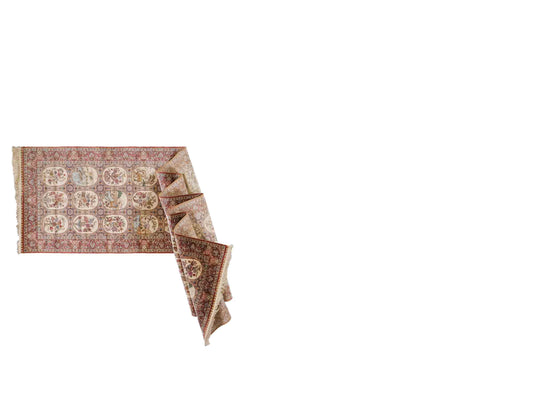
Runners, such as 250×70 cm or 300×80 cm, are also sought‑after: ideal for hallways, staircases or as artistic wall installations. Each format finds its purpose—transforming the signed Qom rug into a distinguished collectible for both floor and wall. Learn more about choosing the right rug size.
Interior & Styling Tips: How to Showcase Signed Qom Rugs
A signed Qom rug is far more than a floor covering—it is an expressive artwork that adds a unique aura to any space. Present it as a luxurious centrepiece and combine it with marble, crystal or sophisticated Art Deco accents. Quality woods, elegant upholstery and curated décor highlight the shimmering silk, intricate motifs and precious character of the rug.
In minimalist interiors, a signed Qom introduces cultural depth and artistic tension. In salons, dining rooms or reception areas, it tells a story of history, craftsmanship and style. Even as a gallery rug, bedside centrepiece or in refined entry halls, its mastery shines: the woven signature marks the fusion of tradition and personal heritage, transforming the rug into a value‑enhancing focal point for generations.
Signed Qom rugs harmonise with classic floors such as parquet or marble and elevate modern concrete or minimal spaces with striking contrast. Placed beneath a chandelier, against an art wall or framing curated objects, the rug becomes a sophisticated stage. Bold combinations with modern design pieces or subtle wall tones elevate the textile artwork into a contemporary context—ensuring it remains a lasting anchor of quality, history and individuality in your home.
Key Qom Rugs at a Glance
| Provenance / Type | Material | Knot Density | Fineness Grade | Special Features |
|---|---|---|---|---|
| Qom Silk Rugs (Iran/Persia) | Pure natural silk | 600,000–1,600,000+ knots/m² | Very fine (luxury) | Brilliant sheen, filigree motifs, highest precision, Persian rug |
| Qom Wool Rugs (Iran/Persia) | Fine cork wool / sheep’s wool | 300,000–500,000 knots/m² | Fine | Warm handle, subtle sheen, classic motifs, durable elegance, Persian rug |
| Signed Qom Rugs (Iran/Persia, China) | Pure natural silk, fine cork wool | 400,000–1,600,000+ knots/m² | Usually very fine (luxury) | Master or atelier signature, sought‑after collector pieces with investment potential |
| Sino Qom Silk Rugs (China) | Finest natural silk | 500,000–1,200,000+ knots/m² | Very fine (luxury) | Chinese craftsmanship, excellent finish, detailed motifs, best luxury value |
| Indo Qom Wool Rugs (India) | Fine sheep’s wool | 200,000–350,000+ knots/m² | Medium to fine | Durable craftsmanship, subtle colours, traditional motifs, excellent value |
| Art Qom Oriental Rugs (China) | Art silk, viscose | 200,000–900,000 knots/m² | Medium to very fine | Animal‑free alternative, modern palettes, some with double knotting, easy care |
FAQ – Frequently Asked Questions about Signed Qom Rugs
Are all Qom rugs signed one‑of‑a‑kind pieces?
Every handmade rug is unique—individual knotting, colour gradients and subtle irregularities make each piece one‑of‑a‑kind. However, only a small portion bear an actual signature. Such pieces typically come from renowned workshops or master weavers and are therefore especially exclusive and desirable among collectors. The signature adds collector value and transforms the rug into a true highlight for connoisseurs.
Where can I find the signature on a Qom rug?
The signature is typically woven in fine silk or wool lettering in Persian calligraphy. It is usually placed subtly at the field’s edge, in a corner of the border or integrated as a small cartouche—visible without disturbing the overall design.
How do I care for a signed Qom rug?
Vacuum gently when dry, avoid moisture and prolonged direct sunlight. For deep cleaning, consult professional rug‑care specialists. Learn more about carpet care.
Can I use signed Qom rugs in everyday living?
Yes—many signed Qom rugs are surprisingly durable due to their premium materials and dense knotting. Especially robust examples offer value, beauty and longevity even with regular use. Only exceptionally rare museum pieces should be showcased in protected spaces to preserve long-term collector value.
Are signed Qom rugs truly investment pieces?
Yes—signed Qom rugs are highly regarded investment pieces. Their quality, rarity and documented provenance make them sought-after on the international art and collector market. Well-preserved, fine signed examples often show stable to rising value. Learn more about value retention.
Do I receive a certificate of authenticity with every Qom rug?
Yes—at JUPITER Intl, every handmade rug comes with a certificate verifying provenance and materials. Learn more about our certificate of authenticity.
Quality, Price & Service by JUPITER Intl
- Each signed Qom rug is a hand‑knotted original carefully selected for workmanship, quality and design
- Transparent provenance: all handmade rugs include a certificate of authenticity
- Fair prices directly from Khademi—no middlemen or misleading “retail prices”
- Wide range: from exclusive Qom silk rugs and exquisite Nain Persian rugs to modern Ziegler Oriental rugs, handwoven kilims and premium machine‑woven rugs
- Personal advice on provenance, size, material and stylistic considerations
- Secure payment, 31-day return policy and free returns for your complete satisfaction
Personal Consultation at JUPITER Intl
Searching for the perfect signed Qom rug, a specific provenance, rare size or design? Our experienced team is delighted to support you—from stylistic guidance to sourcing remarkable collector’s pieces. Contact us by phone or email, or combine your visit with a tour of our showroom located in Hamburg’s UNESCO‑listed Speicherstadt for an authentic encounter with tradition and textile art.
More Information & Links
- Design Classic: Qom Rugs
- Countries of Origin: Iran – Persian Perfection from a Master's Hand
- Countries of Origin: China – Expression of a Rich Culture
- Carpet Guide: How Do I Properly Care for Hand-Knotted Rugs?
- Carpet Guide: What to Consider When Choosing Rug Size
- Carpet Guide: How to Identify Hand-Knotted Rugs
- Carpet Guide: How to Calculate the Knot Density of a Rug
- Carpet Guide: Rug Knot Types Explained
- Carpet Guide: How Sustainable Are Hand-Knotted Rugs?
- Carpet Guide: Are Hand-Knotted Rugs a Good Investment?
- Certificate of Authenticity: Your Guarantee for Quality and Authenticity