









What Does “Mahi” Mean & What Makes the Design Unique?
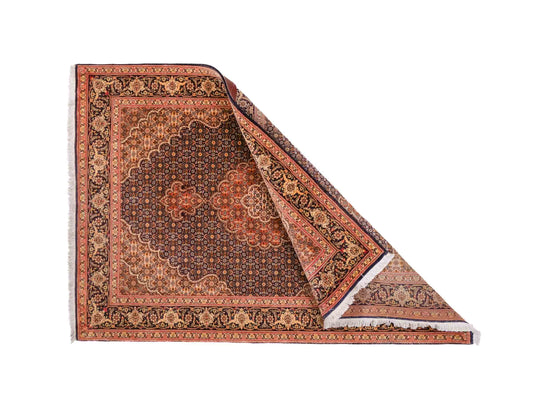
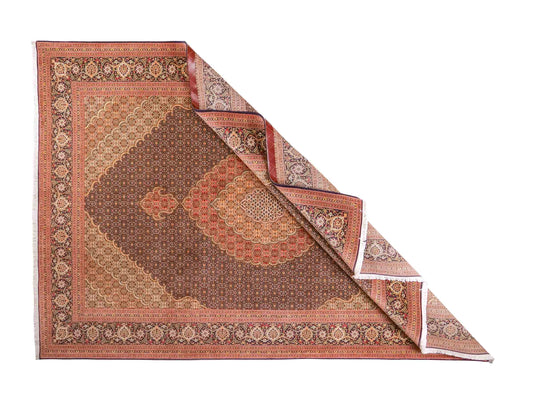
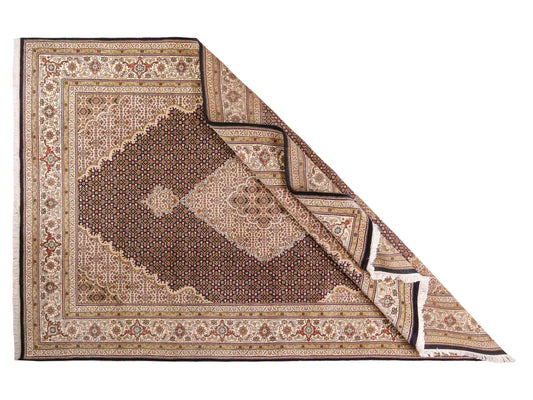
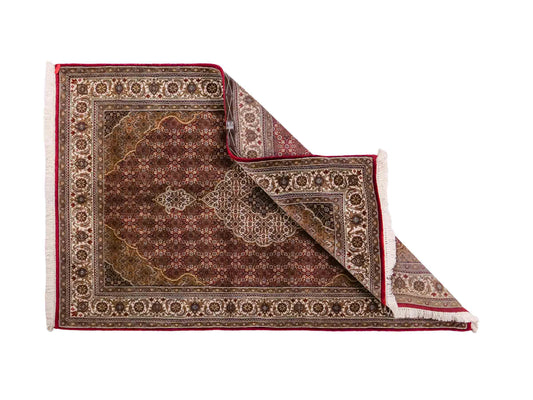
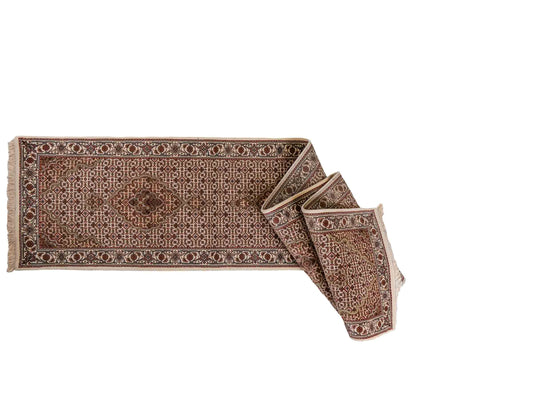
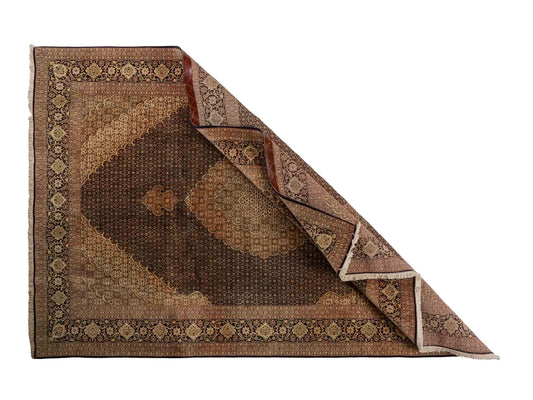
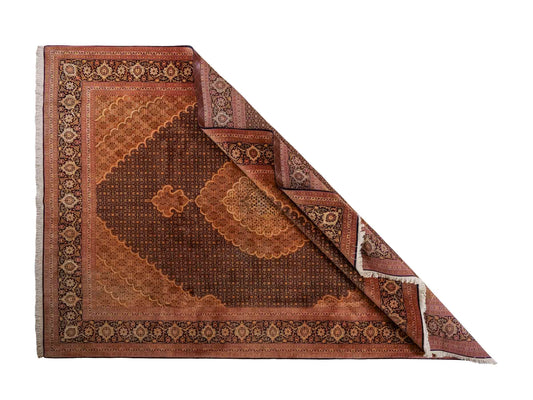
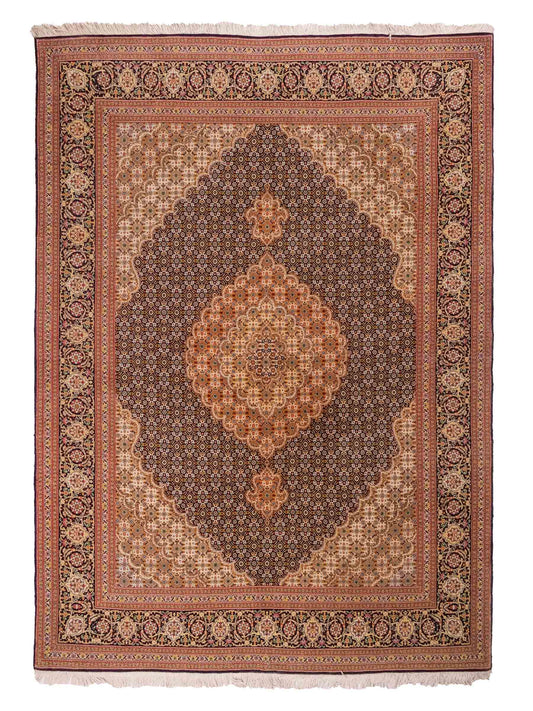
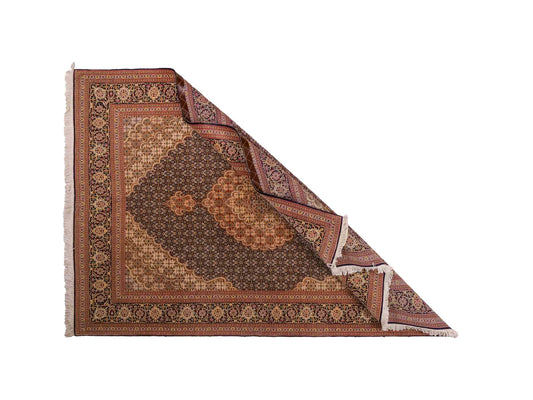
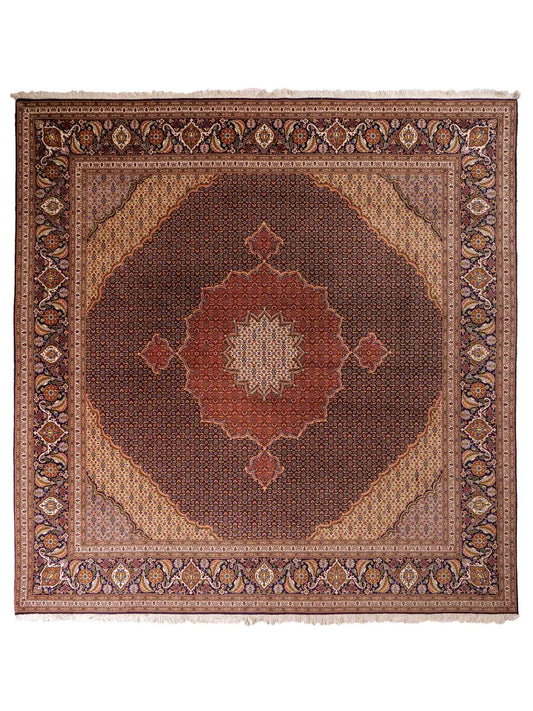
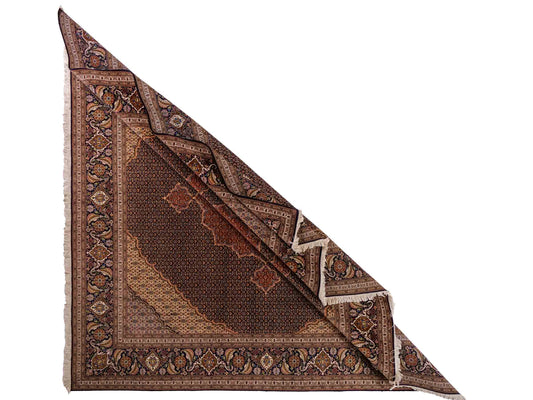
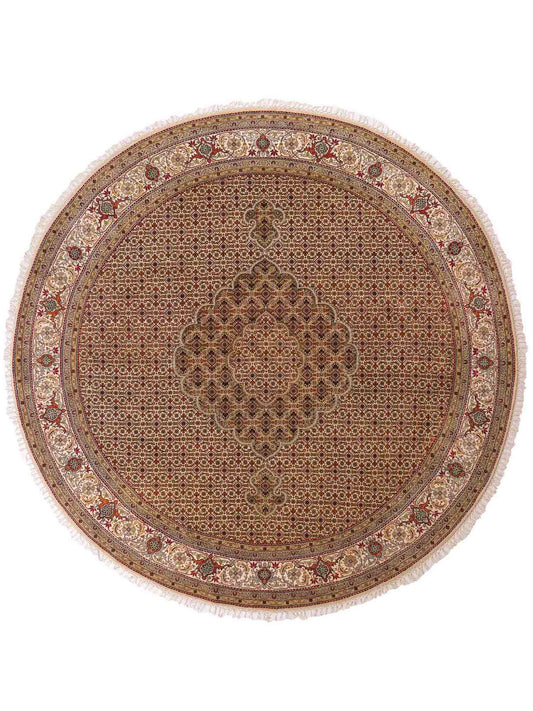
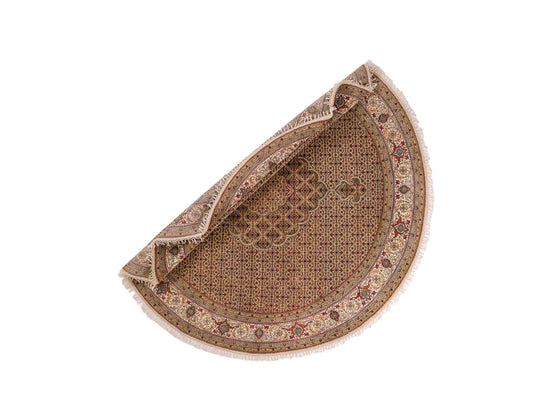
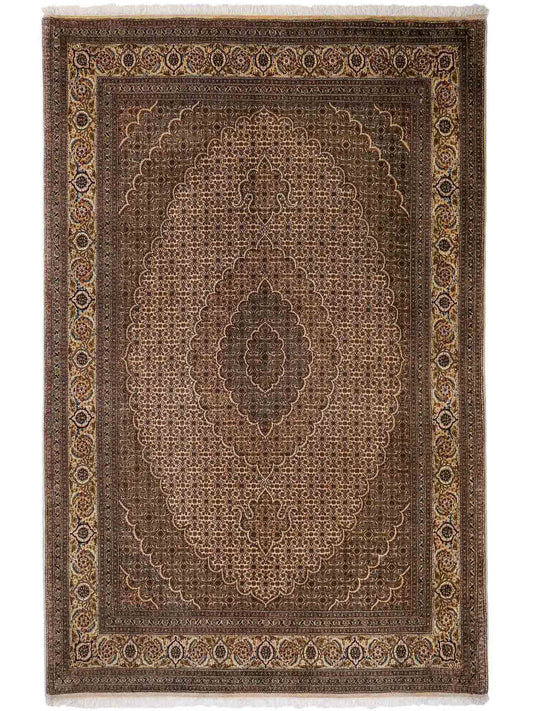
The word “Mahi” means “fish” in Persian and defines one of the world’s most iconic rug motifs. Its hallmark is the repeating “fish-to-fish” pattern: tiny elements framed by floral wreaths or diamonds that appear mosaic-like across the entire field or arranged around a central medallion. This design blends harmony, structure and symbolism—depending on interpretation, “Mahi” stands for water, infinity, or good fortune. The Mahi motif from Tabriz is a true design classic: timeless, understated yet full of depth and meditative tension. It works beautifully in both modern and traditional interiors—and has been rediscovered worldwide by design enthusiasts over the past decades.
What Does “Raj” Mean in Tabriz Mahi Rugs? How Is Raj Calculated?
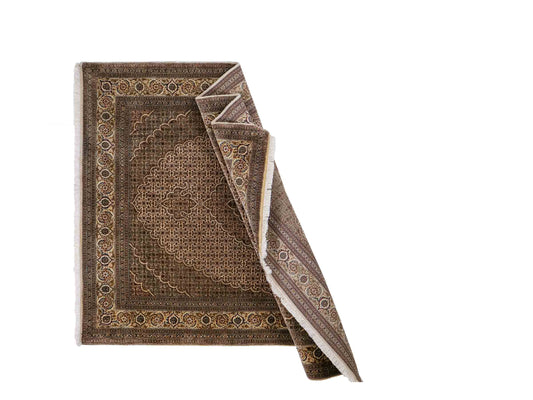
Raj is the traditional unit of measurement used to determine knot density in Tabriz rugs. It is calculated by counting the number of knot pairs within 7 cm on the back of the rug—this number defines the Raj value. High-quality Tabriz Mahi rugs typically range from 30 to 70 Raj:
- 30–40 Raj creates well-defined, slightly more rustic Mahi patterns.
- 50–70 Raj results in denser knotting, finer details and an especially fluid motif arrangement.
The higher the Raj value, the more detailed and precise the iconic “fish” (Mahi) pattern becomes—and the denser, more valuable and more durable the rug is. Raj is therefore a key criterion for assessing the quality, graphic definition and value of a Tabriz Mahi rug.
History & Geographic Origin of Tabriz Mahi Rugs
The origins of Mahi Tabriz rugs lie in the historic weaving city of Tabriz in northwest Iran, long celebrated as a centre of fine carpet craftsmanship. From here, Mahi designs—once prized trading goods and luxury objects—spread across the world. Today, Tabriz Mahi rugs are among the most frequently reproduced classical Persian patterns and remain symbols of timeless elegance. Alongside original Persian masterpieces, high-quality hand-knotted versions are now also crafted in select workshops in India (Indo Tabriz), offering excellent value while remaining faithful to the classic style. Their iconic heritage lends these rugs an enduring sense of tradition that enriches even contemporary interiors with a subtle historical dimension.
Manufacturing Process – Handcrafted Art Made for Generations
1.) Selecting & Preparing the Materials:
The creation of a Tabriz Mahi rug begins with selecting the highest-grade raw materials. Most commonly, multiple-spun new wool is used—valued for its durability and fine texture. In exclusive qualities, the wool is enhanced with natural silk, adding lustre and refinement. Dyeing follows traditional recipes with natural pigments—typically indigo for blues, madder root for reds, or pomegranate peel for warm yellow and gold tones. These carefully crafted small-batch dyes produce vibrant and long-lasting colours that give each rug its distinctive harmony.
2.) Precise Knotting & Motif Execution:
The heart of every Tabriz Mahi rug is the hand-knotting on a vertical loom. Skilled weavers work row by row, usually using the fine Senneh knot. Depending on the Raj value, this allows for anything from subtle to highly detailed execution. The iconic Mahi motif—recognisable by its “fish” shape and characteristic diamond arrangements—may appear in the centre as a medallion or across the field in a harmonious allover layout. This requires meticulous precision, as colours, motifs and proportions must align perfectly. Especially at higher knot densities, this work demands years of experience and utmost focus.
3.) Finishing, Contouring & Quality Control:
Once the knotting is complete, the rug is carefully washed to remove excess pigments and to relax the fibres. It is then dried flat—a traditional, gentle method that ensures shape stability. The pile is sheared by hand to a uniform height, often with contouring to emphasise fine lines and motifs. Edges and fringes are reinforced, and the rug undergoes detailed checks for authenticity, craftsmanship and quality. Only after meeting every criterion is the rug released as a true one-of-a-kind piece—crafted as an heirloom for generations.
Pattern Variety & Colour Palette of Tabriz Mahi Rugs
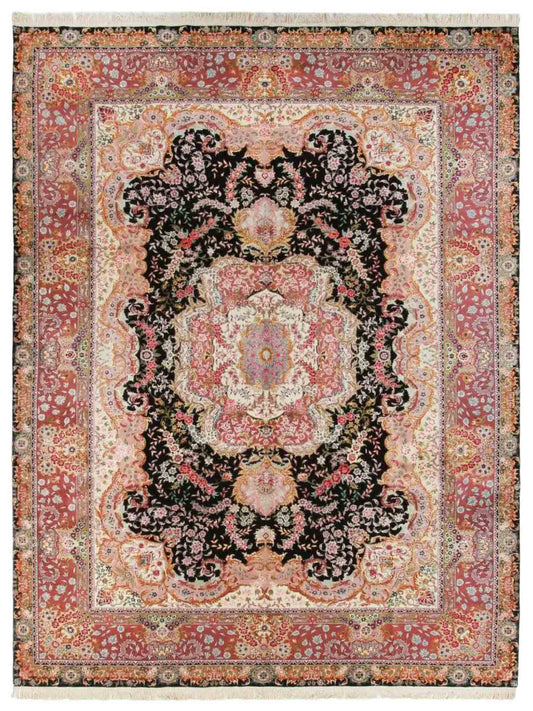
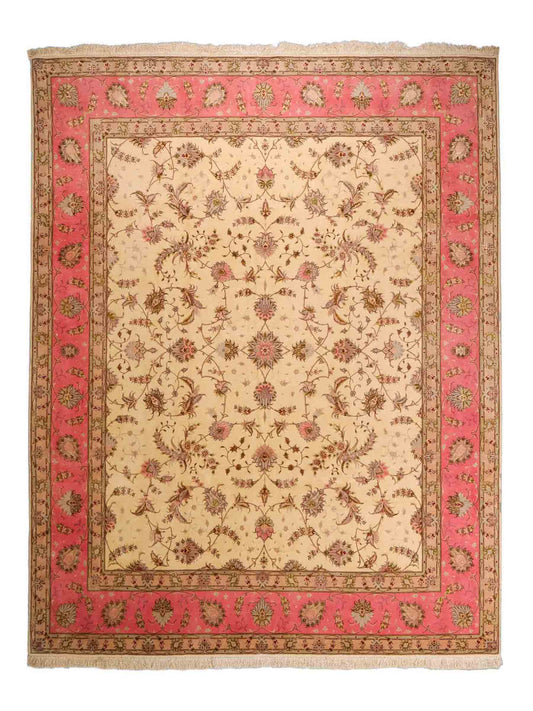
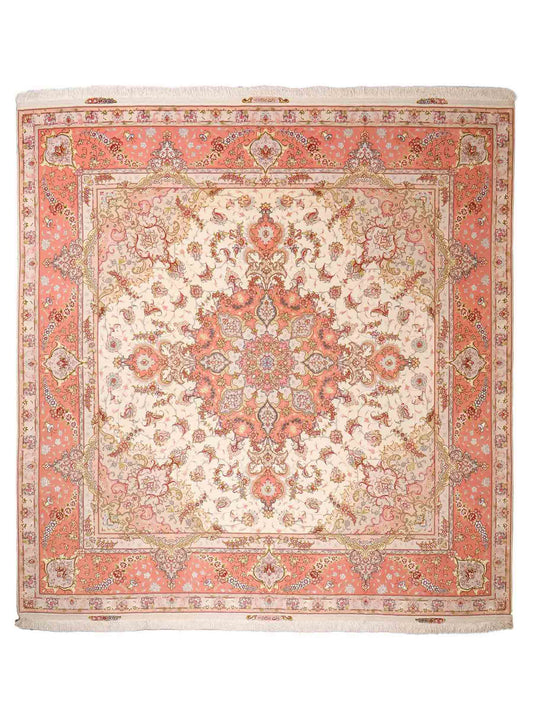
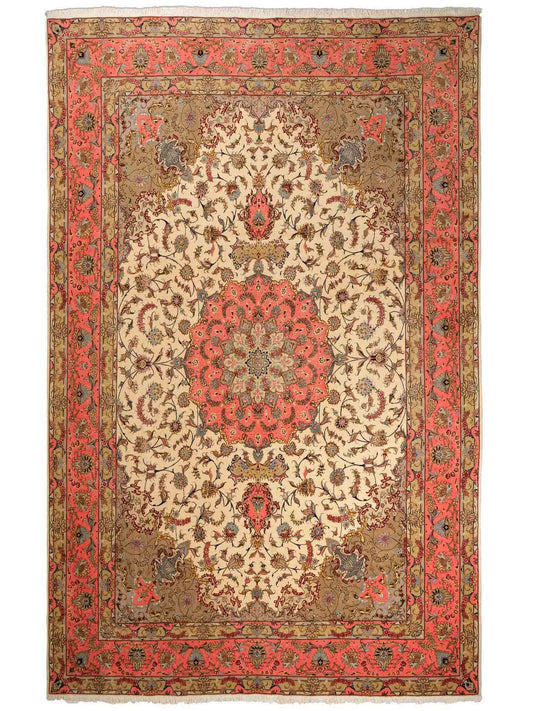
Tabriz Mahi rugs captivate with their signature pattern language and harmonious colour palettes. At the core are the classic fish motifs, presented either in lively allover arrangements or in impressive medallion compositions. Fine small diamonds and organic wave-like lines add movement and depth. The borders are artistically executed, showcasing floral arabesques, delicate Mahi vines, or geometric-floral bands that elegantly frame the centre.
The colour range spans deep blues, reds, beiges, gentle greens and soft ivory tones. Bright accents in reds or emerald greens contrast beautifully with subtle pastels and warm earth hues, depending on provenance. Typical are the beloved “abrash” variations—subtle tonal shifts that give every rug its characteristic vibrancy and individuality. Each Tabriz Mahi thus becomes a unique work of art for your home.
Size Guide for Tabriz Mahi Rugs – Subtle Impact Tailored to Your Space
Tabriz Mahi rugs come in the perfect size for every room and requirement. Small formats such as 90×60 cm are ideal as accent pieces, in workspaces, bedrooms, alcoves or even as charming wall hangings. Medium sizes—120×80 cm to 180×120 cm—add refined accents as focal points in reading corners or create inviting zones in everyday living.
Large rugs from 200×150 cm up to 300×200 cm display their elegant impact particularly in sofa areas, open living spaces or beneath dining tables. Oversized formats—such as 300×250 cm or beyond—offer a truly grand presence in lofts, galleries or spacious lounges. Runners like 250×70 cm or 300×80 cm create artistic pathways in hallways, beside beds or as transitional design features between rooms.
Our tip: Choose a size that highlights the subtle Mahi pattern while maintaining enough open space around it for perfect proportions and visual harmony. For more guidance, explore our tips on rug sizing.
Interior & Styling Tips for Choosing Your New Tabriz Rug
Tabriz Mahi rugs lend timeless elegance to any space and invite a sense of calm. Their fine fish motif pairs beautifully with bright, monochrome furniture and creates sophisticated highlights alongside bronze, glass or ceramic accessories. In modern interiors, they introduce gentle movement and balance the clarity of contemporary furniture silhouettes.
The classic Mahi motif acts as a harmonious anchor—equally suited to minimalist interiors and traditional settings with solid wood, warm brass or natural cotton fabrics. For extra character, embrace layering: a Tabriz Mahi rug reveals extraordinary depth when placed over solid-coloured rugs, sisal or vintage bases—giving your home an inspiring and personal touch.
Key Tabriz Rugs Compared
| Provenance / Type | Material | Knot Density | Fineness Grade | Special Features |
|---|---|---|---|---|
| Tabriz up to 30 Raj Oriental & Persian Rugs (Iran/Persia, India) | High-quality sheep’s wool, some silk | 200,000–400,000 knots/m² | Standard to fine | Durable, classic motifs, accessible entry-level choice |
| Tabriz 40–50 Raj Oriental & Persian Rugs (Iran/Persia, China, India) | Sheep’s wool with silk accents | 400,000–600,000 knots/m² | Fine to very fine | Balanced motifs, crisp contours, premium quality |
| Tabriz 60–70 Raj Oriental & Persian Rugs (Iran/Persia, China) | Cork wool with high silk content | 600,000–900,000 knots/m² | Very fine to super fine | Exquisite details, delicate ornaments, luxury pieces |
| Tabriz 80–90 Raj Oriental & Persian Rugs (Iran/Persia, China) | Finest cork wool & natural silk | 900,000–1,200,000+ knots/m² | Super fine to ultra fine | Rare pieces, master-level artistry, exceptional fineness |
| Signed Tabriz Persian & Oriental Rugs (Iran/Persia, China) | Finest cork wool & natural silk | 400,000–1,200,000+ knots/m² | Fine to ultra fine | Renowned master signatures, atelier pieces, collector’s quality |
| Tabriz Art Pictorial Rugs (Iran/Persia, China) | Finest cork wool & natural silk | 300,000–1,200,000+ knots/m² | Fine to ultra fine | Detailed tableau-style wall rugs with artistic execution |
| Sino Tabriz Oriental Rugs (China) | Fine sheep’s wool with high silk content | 300,000–900,000+ knots/m² | Fine to super fine | Excellent craftsmanship, best luxury value, classic to artistic |
| Indo Tabriz Oriental Rugs (India) | Fine sheep’s wool, sometimes with viscose | 100,000–500,000 knots/m² | Coarse to fine | Affordable entry-level, clean workmanship, durable, faithful to tradition |
| Tabriz Mahi Persian & Oriental Rugs (Iran/Persia, India) | High-quality sheep’s wool, sometimes with silk accents | 100,000–600,000 knots/m² | Coarse to fine | Fish motif (Mahi), timeless design classic from Persia & India |
FAQ – Frequently Asked Questions about Tabriz Mahi Rugs
What makes the Mahi pattern special?
The Mahi pattern is a legendary classic of Oriental carpet art: intricately interwoven fish-like motifs covering the field in a tight, captivating composition. Traditionally, this motif symbolises good fortune, flow and harmony. It unites timeless calm with lively dynamism and lends every room remarkable depth and presence.
Which colours are typical for Tabriz Mahi rugs?
Typical colours include deep, almost blackened blues paired with ivory, beige and warm reds. Anthracite, moss green and gold also appear frequently. Subtle multicolour gradients and tonal nuances add vibrancy and depth. This harmonious palette enhances the elegance and versatility of the classic Mahi design.
How do I properly care for a Tabriz Mahi rug?
Vacuum your Tabriz rug gently on a regular basis (dry only), avoid moisture and prolonged direct sunlight. For full cleaning, always turn to professional rug specialists. Discover more about carpet care.
Are Tabriz Mahi rugs really that durable?
Yes. Tabriz Mahi rugs are known for exceptional durability. Their dense knotting and high-quality wool make them extremely robust and resilient for everyday use. Over time, they develop a refined patina that enriches their character—making them elegant companions for many years and generations.
Do all Tabriz rugs come with a certificate of authenticity?
Yes. At JUPITER Intl, every handmade rug comes with a certificate detailing its provenance and materials. Learn more about our certificate of authenticity.
Quality, Price & Service by JUPITER Intl
- Each Tabriz Mahi rug is a hand-knotted original, selected for craftsmanship, quality and design
- Transparent provenance: all handmade rugs come with a certificate of authenticity
- Fair prices directly from Khademi—no middlemen or misleading “retail prices”
- Wide selection: from exclusive Qom silk rugs, exquisite Nain Persian rugs, modern Ziegler Oriental rugs to handwoven kilims and premium machine-made rugs
- Personal advice on provenance, size, materials and style
- Secure payment, 31-day return policy & free returns for your complete satisfaction
Personal Consultation at JUPITER Intl
Looking for the perfect Tabriz Mahi rug, a specific provenance, size or design? Our experienced team is happy to support you—from expert style advice to sourcing special pieces. Contact us by phone or email, or combine your visit with a trip to our showroom in the historic Speicherstadt, Hamburg’s UNESCO World Heritage Site—experience history and craftsmanship up close!
More Information & Links
- Design Classic: Tabriz Rugs
- Countries of Origin: Iran – Persian Perfection from a Master's Hand
- Countries of Origin: India – Color, Diversity and Tradition
- Carpet Guide: How Do I Properly Care for Hand-Knotted Rugs?
- Carpet Guide: What to Consider When Choosing Rug Size
- Carpet Guide: How to Identify Hand-Knotted Rugs
- Carpet Guide: How to Calculate the Knot Density of a Rug
- Carpet Guide: What’s the Difference Between Rug Knot Types?
- Carpet Guide: How Sustainable Are Hand-Knotted Rugs?
- Carpet Guide: Are Hand-Knotted Rugs a Good Investment?
- Certificate of Authenticity: Your Guarantee for Quality and Authenticity