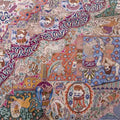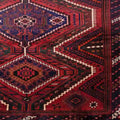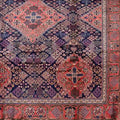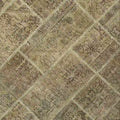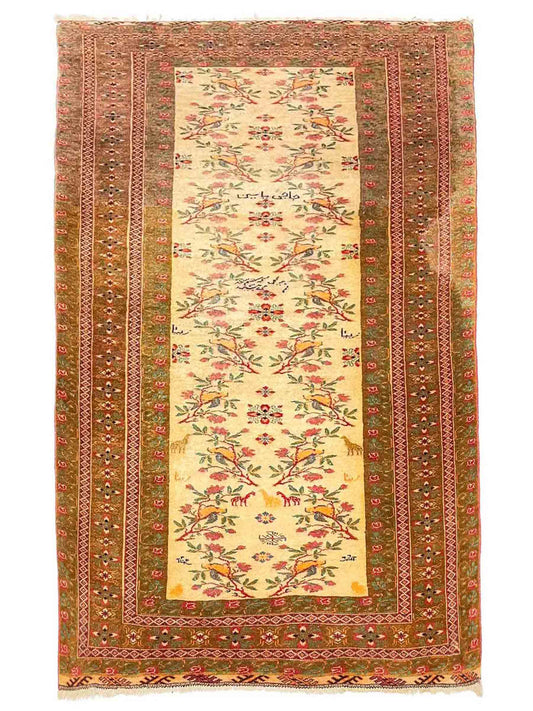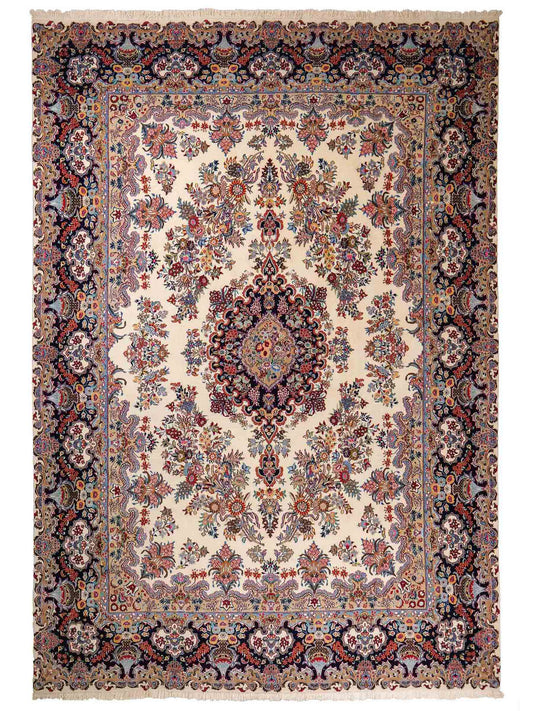

Mashhad rugs rank among the most defining works of northern Iranian weaving tradition. Their luminous reds, deep blues, opulent medallions and large‑format compositions have shaped the textile identity of northeastern Iran for centuries. This guide provides a comprehensive overview of their origin, history, design, craftsmanship and value‑defining characteristics.
Mashhad Rugs: Key Facts at a Glance
- Origin: Mashhad, Khorasan Province, northeastern Iran
- Material: high‑quality wool, natural dyes
- Knot Density: approx. 250,000–500,000 knots/m²
- Designs: large medallions, floral arabesques, sweeping vines
- Colors: deep reds, blues, earth tones, green accents
- Special Features: often large‑format, expressive, culturally significant
Explore Mashhad Rugs – View the Collection
Origin & Geographical Roots
Mashhad lies in northeastern Iran, set within the expansive landscape of Khorasan. The city is a major religious center, home to the Imam Reza Shrine, which draws millions of pilgrims each year — a historical influence that has shaped trade, culture and craftsmanship.
The region offers ideal conditions for rug production: resilient highland wool, mineral and plant‑based dyes and a long tradition of refined ornamentation. Many motifs originate from workshops that have maintained design books passed down through generations.
History
The weaving tradition of Mashhad dates back to the 15th century. With the rise of the Safavids, the region gained further importance. Trade routes and pilgrim movements generated demand, allowing Mashhad rugs to be traded internationally from an early period.
Their hallmark became opulent ornamentation: large, clearly structured medallions, fine arabesques and dynamic floral elements. Today, Mashhad remains one of the most important production centers in northeastern Iran.
Manufacturing & Knotting Technique
- Wool Selection & Cleaning: high‑quality wool with natural sheen
- Dyeing: natural pigments such as indigo, madder, walnut or pomegranate
- Knotting: asymmetric Persian knot; typically 250,000–500,000 knots/m²
- Design Execution: floral motifs, arabesques, large medallions
- Finish: washing, shearing, thorough quality control
Patterns, Designs & Colors
Characteristic Designs
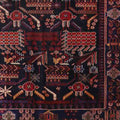
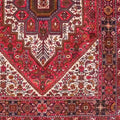
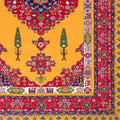
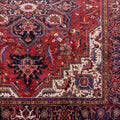
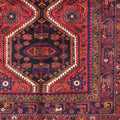
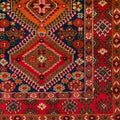
Mashhad rugs are known for their large‑scale, richly articulated ornamentation. The medallion usually forms the center, surrounded by arabesques, sweeping vines and finely layered borders.
Traditional Colors
Typical are:
- Reds: bold, deep, warm
- Blues: calm, clear, structural
- Earth Tones: harmonious and balanced
- Green Accents: subtle and nuanced
Comparison of Classical Provenances
| Characteristic | Bijar | Sarouk | Kashan | Mashhad |
|---|---|---|---|---|
| Origin | Kurdistan / northwestern Iran | Markazi / northwestern Iran | Isfahan / central Iran | Khorasan / northeastern Iran |
| Material | Wool | Wool | Wool, some silk | Wool |
| Knot Density | 250,000–600,000 knots/㎡ | 160,000–400,000 knots/㎡ | 120,000–600,000 knots/㎡ | 200,000–500,000 knots/㎡ |
| Design | Geometric, floral | Floral, geometric | Floral, medallion | Floral, medallion |
| Colors | Red, blue, earth tones | Red, blue, earth tones | Red, blue, beige, green | Red, blue, earth tones, green |
| Special Features | Extremely robust | Clear colors | Harmonious Persian compositions | Large‑format designs |
Checklist: How to Identify a High‑Quality Mashhad Rug
- high‑quality wool with natural sheen
- natural dyes
- knot density from approx. 250,000 knots/m²
- distinct central medallion
- fine reverse‑side structure
- harmonious color balance
- certificate recommended
Interior Design Tips
Mashhad rugs are especially impactful thanks to their color depth and strong compositional presence. Some recommendations:
- Visual Centerpiece: Large Mashhad rugs work beautifully beneath dining tables or as the focal point of expansive living rooms.
- Modern Elegance: In minimalist interiors, deep reds and blues add expressive contrast.
- Classic Arrangements: Harmonious with dark woods, brass accents and textured fabrics.
- Zoning: In open‑plan spaces, Mashhad rugs help define distinct living areas.
- Spatial Depth: Their finely detailed ornamentation is especially effective in well‑lit spaces.
Care & Preservation
- vacuum gently, never beat
- blot spills immediately
- avoid direct sunlight
- professional cleaning at regular intervals
Learn more: How to Care for Hand‑Knotted Rugs
Value & Context
Mashhad rugs are established, internationally sought‑after provenances. Value is determined by quality, condition, design complexity and origin. While appreciation is never guaranteed, fine pieces often hold strong collector appeal.
More information: Are Hand‑Knotted Rugs a Good Investment?
FAQ – Mashhad Rugs
What Characterizes an Authentic Mashhad Rug?
► High‑quality wool, medallions, finely executed floral motifs and clear ornamental structure.
Are Mashhad Rugs Suitable for Everyday Use?
► Yes — due to their wool quality, they are exceptionally robust and well‑suited for daily living.
How Should Mashhad Rugs Be Cared For?
► Clean gently, treat stains with care, and have the rug professionally washed at regular intervals.
Are Mashhad Rugs a Good Investment?
► Fine, well‑preserved pieces may hold collector value — depending on quality, motif, condition and demand.
Conclusion
Mashhad rugs bring together cultural history, meticulous craftsmanship and expressive color worlds. Their distinctive ornamentation, high material quality and long tradition make them durable interior textiles with aesthetic and cultural depth.
Discover Mashhad Rugs – View the Collection