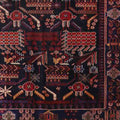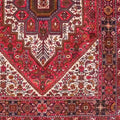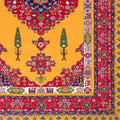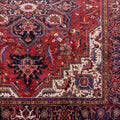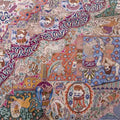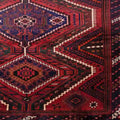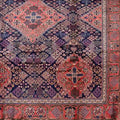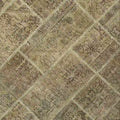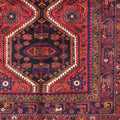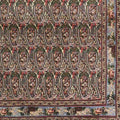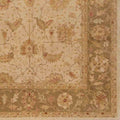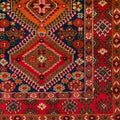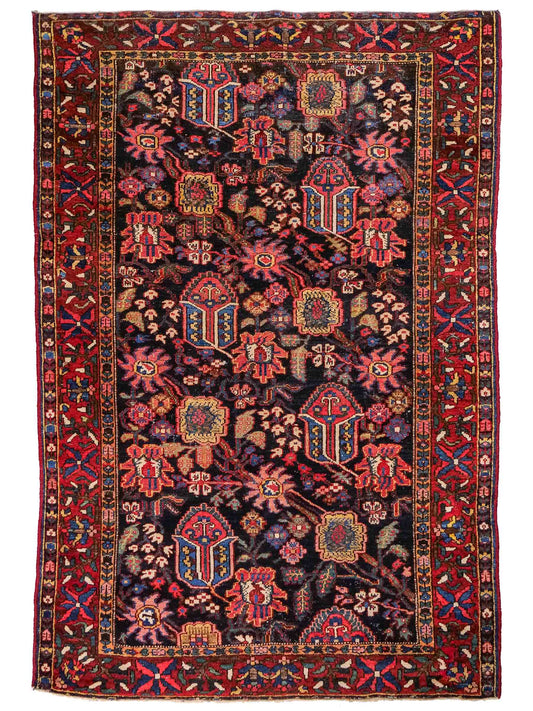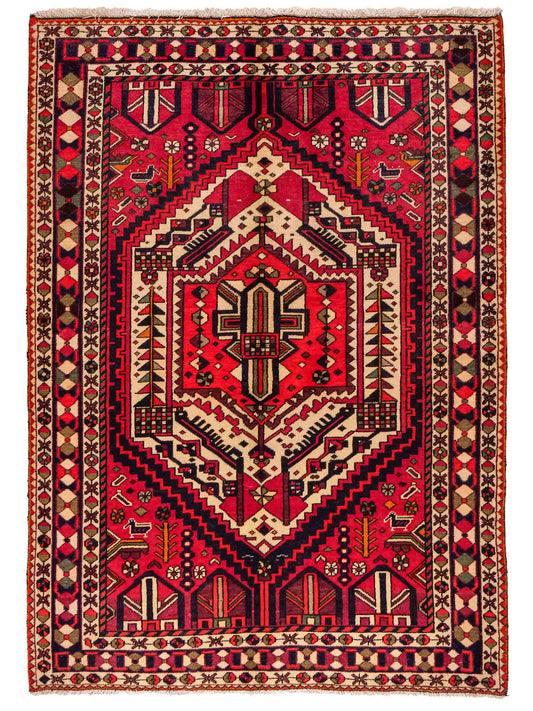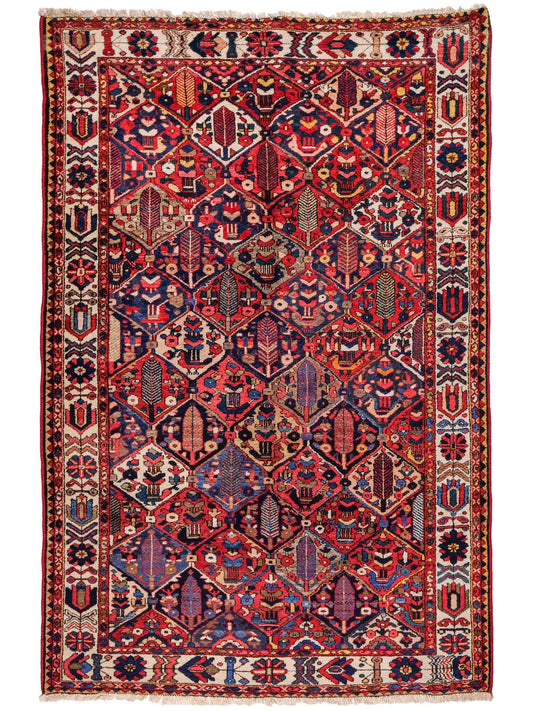

Bakhtiar rugs belong to the most expressive weaving traditions of Iran. Their characteristic garden motifs, vivid colors, and robust handcraft lend them a striking visual presence. They reflect the history of the Bakhtiari region and embody a living connection between nomadic heritage and village weaving artistry.
Bakhtiar Rugs: Key Facts at a Glance
- Origin: Bakhtiari region (western Iran, Chaharmahal & Bakhtiari)
- Materials: high‑quality wool, occasional wool‑silk blends, natural dyes
- Motifs: Khesti garden panels, medallions, floral and geometric patterns
- Knot density: approx. 120,000–300,000 knots/m²
- Character: decorative, detailed, rooted in tradition
- Care: easy maintenance, long‑lasting
Discover Bakhtiar rugs – view the collection
Geography, History & Cultural Significance
Where Do Bakhtiar Rugs Come From?
The Bakhtiari region is shaped by mountain ranges, valleys, and expansive grazing lands. The nomadic and semi‑nomadic communities here have relied for centuries on their own wool, regional natural dyes, and deep‑rooted design traditions.
History of the Weaving Tradition
Bakhtiar rug production dates back to the 16th century. Trade routes across Iran helped these rugs reach Europe and Asia early on, influencing how Persian village rugs were perceived internationally.
Cultural Significance
Many motifs tell stories of nature, tribal life, and ritual traditions. Women play a central role in the weaving heritage—their knowledge is passed down through generations, preserving the craft to this day.
Craftsmanship & Sustainability
Hand‑Knotted Structures
- Wool sourcing: regional wool with a dense, tactile structure
- Dyeing: natural pigments from plants and minerals
- Knotting: 120,000–300,000 knots/m² for robust density
- Finishing: trimming, washing, and precise hand‑finishing
Sustainability
Local materials, manual craftsmanship, and regional value creation remain central. Many workshops operate resource‑consciously using traditional production methods.
Learn more: How Sustainable Are Hand‑Knotted Rugs?
Design Diversity of Bakhtiar Rugs
Typical features include:
- Khesti garden motifs (“garden panels”)
- large medallions
- floral motifs and stylized blossoms
- geometric and animal elements
The palette ranges from warm earth tones and deep reds to strong blues—always composed with a harmonious balance.
Village & Nomadic Rugs in Comparison: Bakhtiar · Ghashghai · Lori · Malayer
| Criterion | Bakhtiar | Ghashghai | Lori | Malayer |
|---|---|---|---|---|
| Origin | Western Iran (Isfahan & Chahar Mahal) | Southwest Iran (Fars) | Southwest Iran (Luristan) | Western Iran (Hamadan region) |
| Materials | Wool, cotton warp | Wool, cotton warp | Wool, cotton warp | Wool, occasional silk, cotton warp |
| Knot density | 120,000–300,000 knots/m² | 80,000–300,000 knots/m² | 100,000–300,000 knots/m² | 150,000–250,000 knots/m² |
| Design | Garden panels, medallions | Tribal motifs, diamonds, animals | Primitive geometries | Geometric, floral |
| Color palette | Red, blue, green | Red, blue, yellow, natural | Red, brown, orange | Red, blue, earth tones |
| Character | Bold, decorative | Expressive, tribal | Authentic, robust | Rustic, detailed |
Care & Maintenance
- Vacuum gently on a regular basis
- Blot stains immediately
- Avoid direct sunlight
- Professional cleaning every 1–2 years
More guidance: How Do I Properly Care for Hand‑Knotted Rugs?
Interior Selection & Styling
Bakhtiar rugs pair beautifully with:
- classic interiors with wooden furniture
- modern, clean spaces as a warm accent
- Scandinavian designs with muted colors
- large living areas with prominent placement
Value & Context
Bakhtiar rugs typically fall within the mid‑price range. Their collectible potential— as always—depends on provenance, preservation, motif quality, and materials. While value appreciation is not guaranteed, selected pieces remain appreciated over time.
Further information: Are Hand‑Knotted Rugs a Good Investment?
FAQ – Bakhtiar Rugs
What Is the Typical Hallmark of a Bakhtiar Rug?
► The characteristic Khesti garden panels, dense knotting, and strong naturally dyed colors.
Are Bakhtiar Rugs Easy to Maintain?
► Gentle vacuuming and careful spot cleaning are usually sufficient. Avoid direct sunlight.
How Long Does a Bakhtiar Rug Last?
► With proper care, Bakhtiar rugs can be enjoyed for decades.
Are Bakhtiar Rugs Value‑Stable?
► Depending on origin, pattern quality, and condition, selected pieces may attract collectors—though without guaranteed appreciation.
Conclusion
Bakhtiar rugs combine traditional nomadic motifs, robust materials, and a strong visual language. Their characteristic garden designs and dense hand‑knotting make them both durable and highly versatile. Counted among the most expressive village and regional rugs of Iran, they complement a wide range of contemporary interior styles.
Explore our variety of Bakhtiar rugs.