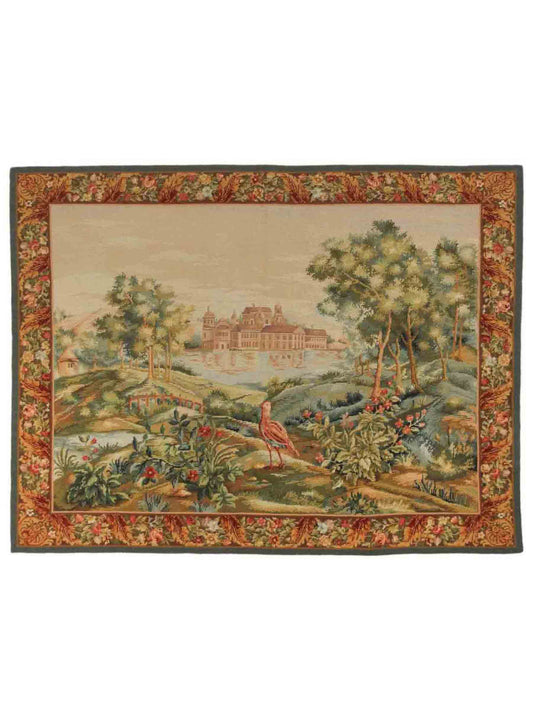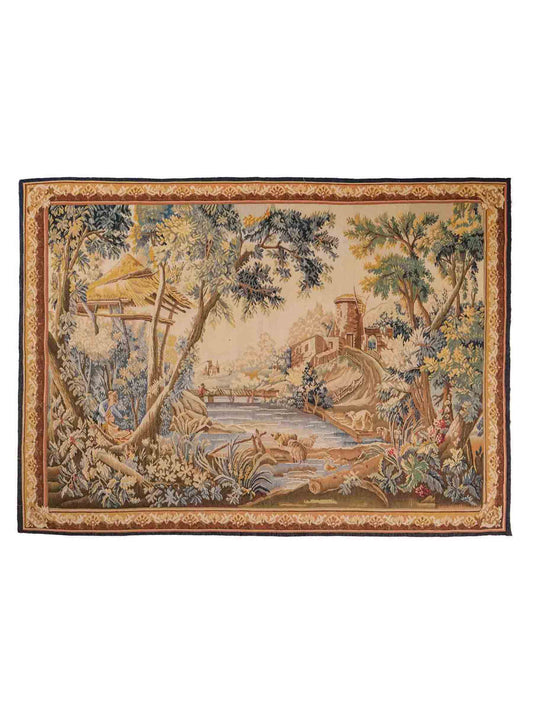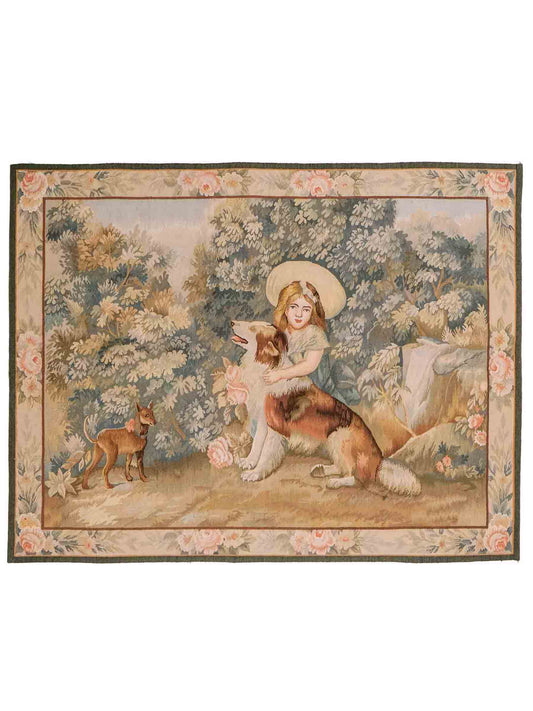










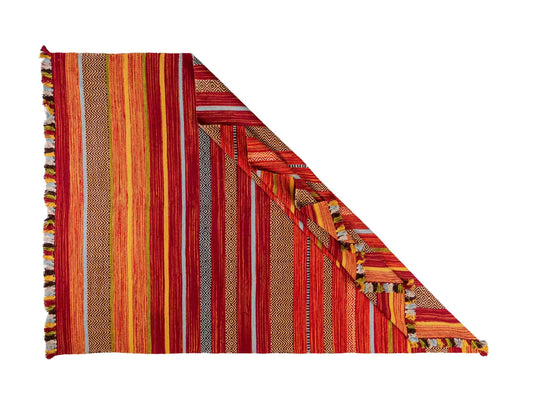

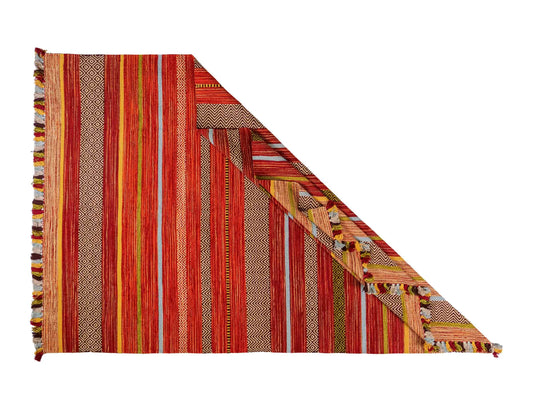


What is a Kilim?
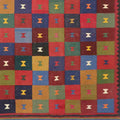
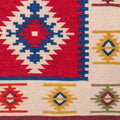
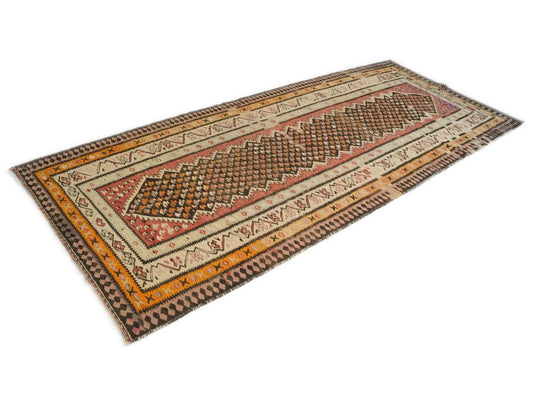
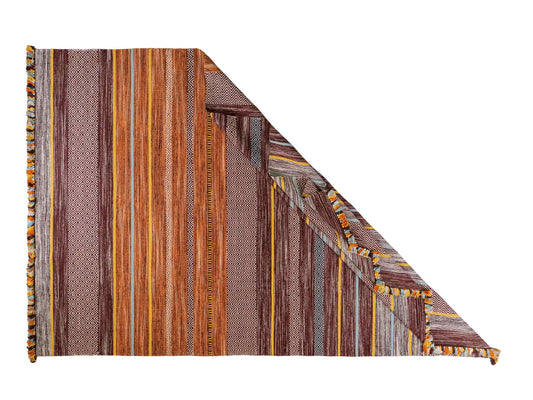
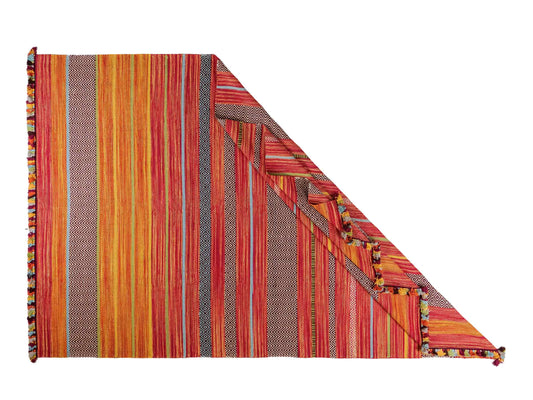
Kilims are handwoven pileless rugs, usually made from hand-spun sheep’s wool, cotton, or innovative blends. As flatweaves, they stand out with bold, often geometric or tribal patterns, light weight, and reversible usability—making them all-rounders among oriental rugs. Traditionally, kilims serve as floor coverings, wall tapestries, seat pads, or even table throws. Most classic kelims come from Iran, Afghanistan, India, Pakistan, China, the Caucasus, and Turkey.
How Is a Handwoven Kilim Made?
The craft of a genuine kilim begins with carefully selected wool or cotton. In traditional workshops, the wool is hand-spun and dyed—typically with natural pigments and often after time-honored family recipes. After drying, the warps are stretched tightly on the loom, and skilled weavers pass the colorful weft yarns with precision. Special combs and tools compact the fabric to create the signature flat yet robust kelim weave. Every motif edge, colorfield, and little irregularity bears witness to hand craftsmanship—making each one a spiritual and cultural one-of-a-kind.
What Makes Handwoven Kilims Stand Out?
- Every kilim is made with artisanal flatweave technique on traditional looms—not knotted, but woven, often making them fully reversible.
- Kelim weaving comes from nomadic and village communities; tradition passed down through generations for centuries.
- Popular origins include Afghanistan, China, India, Iran/Persia, the Caucasus, Pakistan and Turkey—every region has its unique tradition, design language, symbolism and color palette.
- Compared to high- or low-pile rugs, kilims are exceptional for their light weight, durability, and multi-purpose flexibility.
Colors & Patterns – Handwoven Inspiration from East & Modernity
Handwoven kilims are timeless works of art, their patterns and colors inspired by Oriental tradition as well as contemporary trends. Their special allure is versatility: they combine effortlessly with styles from boho, country, and Scandi to ethnic and even modern loft interiors. Modern kilims reimagine classic motifs with clear lines and surprising color harmonies for a touch of minimalism. Thus, kilims bring together heritage and modernity in style—enriching each living space with personality and energy.
- Pattern variety: Classic geometric motifs—diamonds, stripes, zigzags, stars, medallions—as well as figurative forms such as stylized animals, trees and symmetric ornaments.
- Popular colors: From soft earth tones, terracotta, ochre, rust, olive to bold blue, red, pink, turquoise, indigo—as well as modern pastel, beige, white, grey, black, and trendy colors.
Guide & Tips: The Flexible Magic of Handwoven Kilims
Handwoven kilims are the true all-rounders for practical, flexible home inspiration. Lightweight, they’re easy to move and ideal for quick space updates. Reversible options mean stains or signs of wear are simply hidden by flipping. Kilims work beautifully on wood, stone, or tile floors and can even be used outdoors in dry weather. As wall decoration, throw, bedcover or sofa accent, they add style wherever placed. For allergy sufferers, families or homes with pets, kilims are low pile and trap less dust—making them perfect for flexible, minimalist lifestyles and spontaneous restyling. Crafted from natural wool or cotton, they’re durable and robust; traditional weaving guarantees each is a one-off with its own character. Care is simple: light beating or a gentle vacuum preserves color and pattern. Learn more about carpet care.
Handwoven Kilims at a Glance
| Provenance | Main Material | Construction | Origin |
|---|---|---|---|
| Indo Kilim | Hand-spun wool, cotton or blends | Handwoven | India |
| Kilim Afghan | Hand-spun wool or cotton | Handwoven | Afghanistan |
| Russia Kilim | Hand-spun wool | Handwoven | Caucasus |
FAQ – Frequently Asked Questions about Handwoven Kilims
Are handwoven kilims easy to care for?
Absolutely! Quick vacuuming, flipping from time to time, keeping out of direct sun and moisture, and, if necessary, cleaning gently with water and mild detergent followed by air drying is sufficient. Have especially fine or delicate pieces cleaned by professionals. Learn more about carpet care.
Will my kilim fade with a lot of sun?
Handwoven kilims from genuine wool or cotton will retain their color brilliance for a long time with proper care. However, direct sun over time may cause some fading—simply rotate or move your kilim to a less sunny spot to preserve vibrance.
Which handwoven kilim matches my interior?
When choosing a kilim, consider your room’s color and decor style. For boho interiors, opt for bold and playful motifs; Scandi rooms benefit from calm earth tones; in classics, symmetric patterns and strong contrasts create a harmonious effect. To visually enlarge small spaces, choose light colors and subtle motifs. With lots of furniture, understated designs keep the space balanced.
Can a kilim be used as a wall hanging or table covering?
Absolutely! Thanks to their sturdy, flat weave, kilims are ideal as decorative wall art, throws or even as table coverings—bringing style and personality to every setting.
Do I receive a certificate of authenticity with every handwoven kilim?
Yes—at JUPITER Intl, every handwoven kilim comes with a certificate indicating provenance and materials. Read more about our certificate of authenticity.
Quality, Price & Service by JUPITER Intl
- Every handwoven kilim is a carefully selected original, chosen for craftsmanship, authenticity, and condition
- Transparent provenance: all handmade rugs come with a certificate of authenticity
- Fair prices directly from Khademi—no middlemen or misleading “retail prices”
- Wide assortment: from exclusive Hereke silk rugs to modern Ziegler Oriental rugs
- Personalized advice on provenance, size, materials, and style
- Secure payment, 31-day return policy, and free returns for your complete satisfaction
Personal Consultation at JUPITER Intl
Looking for the perfect handwoven kilim, a rare provenance, a certain size, or a unique color and design? Our knowledgeable team is happy to help—from expert consultation to sourcing truly exceptional pieces. Contact us by phone or email, or combine your visit with a trip to our showroom in Hamburg’s UNESCO World Heritage Speicherstadt—experience the history and living culture of weaving up close!
More Information & Links
- Design Classic: Kilim Rugs
- Countries of Origin: Iran – Persian Perfection from a Master's Hand
- Countries of Origin: China – Expression of a Rich Culture
- Countries of Origin: Afghanistan – Hand-knotted Stories
- Countries of Origin: Pakistan – A Festival of Motifs and Colours
- Countries of Origin: India – Color, Diversity and Tradition
- Countries of Origin: Caucasus – Threads Full of Memories
- Countries of Origin: Turkey – Art and Culture in Every Knot
- Carpet Guide: How Do I Properly Care for Hand-Knotted Rugs?
- Carpet Guide: What to Consider When Choosing Rug Size
- Carpet Guide: How to Identify Hand-Knotted Rugs
- Carpet Guide: How to Calculate the Knot Density of a Rug
- Carpet Guide: What’s the Difference Between Rug Knot Types?
- Carpet Guide: How Sustainable Are Hand-Knotted Rugs?
- Carpet Guide: Are Hand-Knotted Rugs a Good Investment?
- Certificate of Authenticity: Your Guarantee for Quality and Authenticity