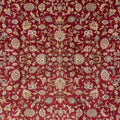

Persian rugs are among the most significant expressions of Iranian art history. They unite artisanal tradition, cultural identity and extraordinary formal precision. This article explores their historic roots, regional styles, the diversity of their patterns, and the materials and techniques that have shaped them for centuries.
Persian Rugs: Key Facts at a Glance
- Persian rugs: expressions of cultural identity and historic craftsmanship.
- Motif diversity: floral patterns, geometric elements, figurative scenes.
- Materials: premium wool, silk, cotton and natural dyes.
- Knotting technique: asymmetric Persian knot, sometimes exceeding 1,000,000 knots/m².
- Important centers: Qom, Isfahan, Tabriz, Nain, Kerman, Kashan, Sarouk and others.
- Unique pieces: each rug carries its own unmistakable signature.
Discover Our Persian Rugs – View the Collection
The History of Persian Rugs
The tradition of rug weaving in Persia dates back to the 5th century BC. Early pieces often served representative purposes, adorning palaces, temples and noble residences. The famous “Pazyryk Carpet” — dated to the 5th century BC — is considered the oldest surviving example of classical weaving, already featuring motifs that define Persian artistry to this day.
Over centuries, rug weaving became a central pillar of Persian culture. Many motifs, color combinations and techniques were passed down within families and remain characteristic of regional styles.
Cultural Significance of Persian Rugs
Persian rugs are not only aesthetic objects but hold symbolic and social importance. They accompany celebrations, ceremonies and rites of passage, and in many families are valued as cherished everyday and heirloom pieces.
Their stylistic variety — from finely rendered garden motifs to grand medallion designs — makes them important cultural artifacts and unique works of craftsmanship.
Patterns, Designs & Regional Diversity
The design world of Persian rugs is extraordinarily diverse. Common design elements include:
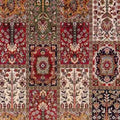
- Floral motifs: artfully composed plant and blossom forms.
- Geometric structures: clear formations, often combined with traditional frame motifs.
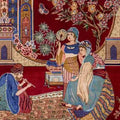
- Figurative depictions: scenes from mythology or literature such as the “Shahnameh.”
- Regional styles: each weaving center has a distinct artistic identity — an overview is available in our Design Classics Blog.
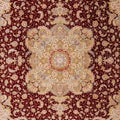
Medallion, allover and garden motifs are particularly widespread. Many designs reflect regional traditions, influenced by historical events, local aesthetics and symbolic themes.
High‑Quality, Natural Rug Materials
Material selection and craftsmanship largely determine the quality of a Persian rug. Classic materials include:
- Wool: resilient, warm, naturally elastic.
- Silk: used for exceptionally fine and detailed rugs, often in pile or warp threads.
- Blends: wool‑silk combinations unite durability with sheen.
- Cotton: commonly used in the foundation and enabling high knot densities.
Natural dyes from plants, roots and minerals create the rugs’ characteristic depth of color and subtle tonal variations.
Persian Knotting Art: Quality in Every Knot
The Persian or asymmetric knot — also known as the Senneh or Farsibaff knot — enables extremely fine and detailed designs. Rugs from centers such as Qom, Isfahan and Tabriz often exceed 1,000,000 knots/m².
The higher the knot density, the more complex the pattern and the more time‑intensive the production. Some rugs require months or even years of meticulous handwork.
Categories at a Glance:
- Masterpieces: over 1,000,000 knots/m².
- Fine luxury qualities: 300,000–1,000,000 knots/m².
- Robust everyday rugs: lower densities but solid craftsmanship.
Important Persian Rug Provinces & Their Styles
| Region | Signature Features | Colors & Designs | Special Characteristics |
|---|---|---|---|
| Qom (Qum) | Complex, often pictorial motifs | Cream, gold, red, blue, pastels | Renowned for fine silk rugs with exceptional detail |
| Isfahan | Detailed symmetry, floral garden motifs | Ivory, blue, red, green | Silk accents, ultra‑fine knotting, artistic elegance |
| Tabriz | Precise knotting, medallion & floral motifs | Red, blue, ivory, pastels | High knot density, extensive design diversity |
| Nain | Elegant arabesque elements | Ivory, blue, beige | Wool‑silk blends, intricate detail work |
| Kashan | Central medallion, floral arabesques | Deep red, blue, beige | Historic workshops, stable quality |
| Kerman | Rich floral patterns | Red, blue, green, ivory | Classic vase & garden motifs |
| Heriz | Bold geometric medallions, robust structure | Rust red, deep red, blue, earth tones | Extremely durable, coarse but expressive patterns |
| Mashhad | Large medallions, flowing designs | Deep red, navy, cream | Dense wool, timeless Persian aesthetics |
| Bijar | Extremely dense, compact construction | Red, blue, ivory, earth tones | Famously known as the “Iron Rug” for its durability |
| Sarouk | Floral motifs, medallion designs | Salmon, navy, beige | Refined craftsmanship, strong visual clarity |
| Gabbeh | Naïve, tribal, minimalist | Cream, yellow, red, earth tones | Thick pile, playful motifs |
| Hamadan | Robust allover motifs | Red, blue, brown | Folk‑inspired designs, durable |
| Ardabil | Medallions, delicate floral accents | Blue, red, gold, cream | Famous for the historic “Ardabil Carpet” |
Care & Preservation
- Avoid direct sunlight
- Use mild cleaning agents
- Rotate the rug occasionally
More detailed tips can be found in our guide How to Care for Hand‑Knotted Rugs.
An assessment of long‑term value development is available in our article Are Hand‑Knotted Rugs a Good Investment?.
Checklist: How to Identify a High‑Quality Persian Rug
- Hand‑knotted structure with fine irregularities
- Knot density generally from 200,000 knots/m²; fine pieces considerably higher
- Materials: wool, silk or wool‑silk blends, cotton foundation
- Harmonious natural dyes, no artificial high‑gloss finish
- Typical regional designs with clearly articulated motifs
- Well‑defined pattern on the reverse with precise knot structure
- Certificate or proof of origin recommended
FAQ – Persian Rugs
How Can I Recognize a Genuine Persian Rug?
► By fine knotting, regional designs, natural materials and a clear pattern visible on the reverse side.
What Determines the Value of a Persian Rug?
► Origin, knot density, material quality, motif complexity and condition are key factors.
Are Persian Rugs Value‑Stable?
► Pieces with clear provenance, fine craftsmanship and excellent preservation can be of strong collector interest — depending on the market.
How Should I Care for a Persian Rug?
► With gentle cleaning, protection from direct sunlight and occasional rotation.
Conclusion
Persian rugs combine centuries‑old craftsmanship with cultural symbolism. Their diversity of motifs, materials and regional styles makes them unmistakable textile objects. Whether exquisite silk masterpieces or robust wool designs — each piece tells a story and carries the artistic tradition of its origin.